My 1st Halloween: A Business Design Review
As an embroidery designer who has spent years translating digital files into tangible brand assets, I approach every new design with a critical eye. When a small business owner or apparel decorator asks for my opinion on My 1st Halloween, I am not just looking for cute pumpkins or spooky fonts. I am evaluating whether this machine embroidery design can withstand the rigors of commercial production while elevating their brand identity. The product description promises a fresh, customized look ideal for personal or commercial use on apparel, linens, and décor items. But in the world of small business merch, "ideal" is often too vague. We need to know if it translates from a screen to a stitched reality that customers will trust and wear.
First Impressions: Professionalism Meets Playful Seasonality
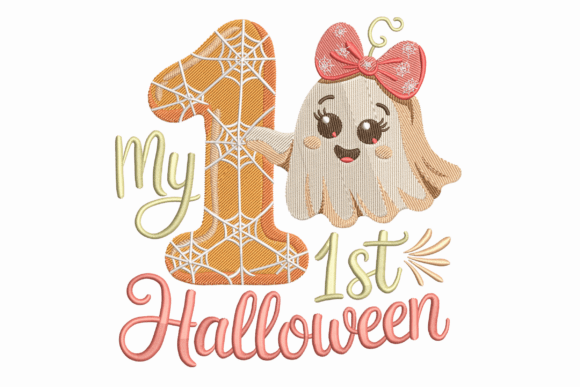
The title My 1st Halloween immediately signals a specific market segment: parents, caregivers, and boutique owners targeting young children or families. Visually, designs with this theme often walk a fine line between whimsical and messy. For a professional embroidery shop, the first impression must be one of quality. Does the design feel handmade and rustic, or does it have the clean lines necessary for a premium brand? In this case, the description highlights a "detailed embroidery design," which suggests complexity. While detail adds value, it also introduces risk regarding stitch density and fabric texture. If the design is too busy, it may lose its charm when scaled down for a cap front or a patch. However, if executed correctly, My 1st Halloween offers a warm, inviting aesthetic that fits perfectly into seasonal collections for bakeries, florists, and pet brands looking to engage with their community during the fall season.
Evaluating Real-World Business Applications
When we move beyond the screen and consider how My 1st Halloween performs in real business use, the versatility becomes apparent. This is not merely a decoration; it is a potential asset for your entire merchandise line. Let’s break down where this embroidery file shines:
- Embroidered Patches: One of the most cost-effective ways to use this design is as a detachable patch. Small businesses can order bulk patches and apply them to denim jackets, tote bags, or backpacks. The detailed nature of the design allows for a rich, textured look that stands out against heavy canvas or denim.
- Staff Uniforms and Aprons: For a café or bakery, adding apron embroidery featuring this motif creates an instant seasonal connection with customers. It humanizes the brand and makes staff uniforms feel festive without requiring a full uniform change.
- Cap Embroidery: Hats are high-margin items. Placing this design on the front panel of a structured cap requires careful attention to size. If the details are too fine, they may get lost, but if balanced well, it becomes a standout accessory for local events or school spirit days.
- Tote Bag Design: Reusable bags are excellent for brand visibility. A large-scale version of My 1st Halloween on a cotton tote serves as both a functional item and a walking billboard for your business.
- Event Merchandise and Gifts: Boutiques and Etsy sellers can use this design for limited-run holiday gifts. Whether it is a pillowcase, a baby onesie, or a decorative throw, the ability to offer custom apparel with a timely theme drives sales.
Strategic Placement and Brand Identity
Integrating My 1st Halloween into your product line affects more than just aesthetics; it impacts your brand identity and customer trust. A well-executed embroidery project signals professionalism. When a customer holds a finished product with crisp stitching and vibrant thread colors, they perceive higher value. Conversely, a poorly placed or over-stitched design can make a brand look amateurish. This design works best as a chest logo accent, a sleeve detail, or a central feature on a tote bag. It should complement your existing design assets rather than clash with them. If your brand is modern and minimal, ensure the playful elements of this Halloween theme do not overwhelm your visual consistency. The goal is to create a cohesive look that encourages buyer engagement and reinforces your reputation for quality handmade products.
Critical Considerations for Production
Despite its potential, there are scenarios where My 1st Halloween must be used carefully. As a designer, I always advise clients to test before committing to a full run. Here are the areas that require scrutiny:
- Small Patch Sizes: Detailed designs often suffer when scaled down. Tiny lettering or intricate outlines may become indistinguishable blobs of thread. Always check the minimum recommended size for this digital embroidery file.
- Curved Surfaces: Cap fronts and bottle openers present challenges. Ensure the design layout accommodates curvature without distorting the imagery.
- High Stitch Density: The description mentions "detailed," which often implies high density. On lightweight fabrics like chiffon or thin jersey, this can cause puckering. You must match the design to the appropriate fabric texture.
- Dark Uniforms: If you plan to embroider this on dark fabrics, the underlay and thread colors become critical. Without proper contrast, the design may disappear.
- Frequent Washing: Items like aprons and work shirts undergo rigorous washing cycles. Verify that the stabilizer and thread choice can handle repeated laundering without fraying or fading.
Practical Designer Notes for Success
To ensure My 1st Halloween delivers a premium result, follow these practical steps before mass production:
- Test in Black and White First: Run a test stitch using a single color to check the flow of the design and identify any tension issues before committing to expensive multi-color threads.
- Verify Hoop Size: Confirm that the design fits within your machine's hoop limits. If it requires taping or re-hooping, the registration might shift, ruining the alignment.
- Select the Right Stabilizer: Do not skimp on backing. For dense designs on stretchy knits, a cutaway stabilizer is essential to prevent distortion. For woven fabrics, a tear-away might suffice.
- Create a Printable Mockup: Before selling to clients, generate a high-quality mockup showing the design on actual products. This helps manage client expectations and secures approval.
- Review Thread Color Contrast: Ensure the chosen palette pops against the base fabric. Subtle tones can look muddy if the stitch count is too low.
- Confirm Commercial Licensing: The product description states the design is "Ideal for personal or commercial use." However, always double-check the specific license terms included with the file download to ensure you are covered for unlimited production runs or resale.
In conclusion, My 1st Halloween is a versatile asset for decorators and small business owners willing to put in the technical groundwork. By respecting the limitations of stitch density and fabric choice, you can transform this machine embroidery design into a profitable addition to your seasonal catalog. Whether it ends up on a child's shirt, a staff apron, or a branded patch, the key lies in execution. Treat every stitch as a reflection of your brand, and this design will serve your business well throughout the spooky season and beyond.